Reviewing the Proud Cat Mom SVG for Embroidery
As a designer who spends half my life staring at digitized paths and the other half pulling threads out of jammed machines, I have learned to be skeptical of cute graphics. We see thousands of files labeled as ready for production, but few survive the transition from screen to fabric without losing their charm or structural integrity. When I opened the folder for Cat Svg Design. Proud Cat Mom, my initial reaction was cautious optimism. The concept is evergreen; cat lovers are a dedicated demographic, and the "proud parent" angle sells consistently across Etsy and boutique markets. However, knowing a design looks good on a monitor is very different from knowing how it behaves under a needle.
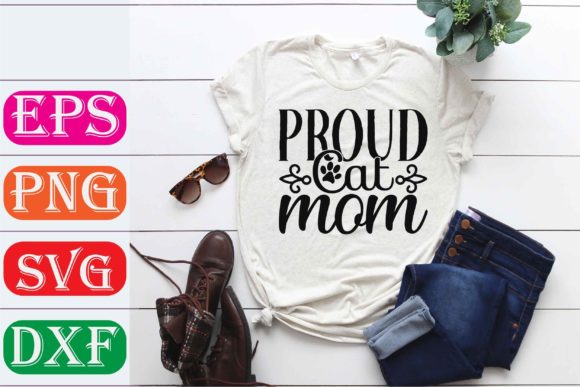
The first impression of this design is one of playful confidence. The layout balances whimsical typography with a recognizable feline silhouette, creating a visual hierarchy that draws the eye immediately. For those of us working in T-Shirt Designs and broader Graphics, this balance is crucial. If the text overwhelms the image, it looks cluttered. If the image dominates, the message gets lost. This particular arrangement feels intentional, suggesting that the creator understands spacing and negative space, which are vital when converting vector art into a functional machine embroidery design.
Real-World Application: The Tote Bag Test
To truly evaluate Cat Svg Design. Proud Cat Mom, I moved beyond digital mockups and considered a tangible project. I envisioned a heavy-duty canvas tote bag, a staple item for any craft business or Etsy seller. Canvas provides a stable base, reducing the risk of puckering that often plagues lighter fabrics. In this scenario, the design needs to be bold enough to read from a distance but refined enough to justify a premium price point.
When stitching this onto a tote, the thickness of the thread becomes a major factor. A standard 40-weight rayon or polyester thread would likely fill the larger areas of the cat shape effectively, using a fill stitch pattern that provides coverage without excessive bulk. The text, however, requires precision. If the lettering is too thin, it may disappear into the weave of the canvas. If it is too dense, it can cause the fabric to pull and distort. Based on the visual weight of the Cat Svg Design. Proud Cat Mom files, it appears suited for medium-density stitching, which is ideal for durable goods that will see frequent use.
Fabric Compatibility and Stitch Behavior
One of the most critical aspects of reviewing any digital embroidery file is understanding where it fails. While this design shines on stable materials like denim, canvas, or twill, it requires careful handling on stretchy or textured fabrics. For instance, if you plan to use this for sweatshirt embroidery, the pile of the fleece can obscure fine details. In such cases, I recommend using a higher contrast thread color to ensure the outline remains visible. A satin stitch border around the main elements could help define the shape against the fuzzy background, preventing the design from looking muddy.
Conversely, applying this to baby embroidery projects requires extra caution. Baby skin is sensitive, and the back of the embroidery must be soft. This means using a high-quality cut-away stabilizer to support the stitches without adding stiffness, and potentially trimming excess thread tails meticulously. The stitch density of the cat’s features should be checked closely; if there are large solid blocks of color, they might feel stiff against a baby’s cheek. Adjusting the underlay or reducing the density in non-critical areas can make the finished product much more wearable.
Navigating Technical Constraints
The ZIP file for Cat Svg Design. Proud Cat Mom contains EPS, SVG, PNG, and DXF files. It is important to note that these are primarily vector and raster graphic formats, not native machine embroidery formats like PES or DST. This means the end-user must digitize the design or use software to convert these vectors into stitch data. This step is where many hobbyists stumble. Converting an SVG directly does not guarantee optimal stitch placement. You must manually assign stitch types—deciding where to use a running stitch for outlines versus a fill stitch for bodies.
For embroidered patch creation, this design offers excellent potential. Patches allow for higher stitch densities because they are removed from the garment during stitching. You can push the saturation of the thread colors here, making the cat pop with vibrant hues. However, for direct-to-garment applications like caps or curved surfaces, the design’s width must be considered. If the text spans too wide, it may distort over the curve of a baseball cap. In such cases, scaling down the design or breaking it into smaller components might be necessary to maintain professional quality.
Commercial Viability and Brand Consistency
From a business perspective, Cat Svg Design. Proud Cat Mom fits seamlessly into a lineup of personalized gift items. It appeals to a specific emotional niche, which drives higher engagement and conversion rates for small shop product listings. When used in commercial embroidery projects, consistency is key. Ensure that the version you stitch matches your brand’s aesthetic. If your brand is minimalist, keep the thread palette limited to two or three colors. If your brand is playful, experiment with variegated threads to add depth to the cat’s fur.
Before listing this as a design asset or selling finished items, always verify the licensing terms associated with the original graphic. While the file formats suggest versatility for various creative uses, commercial rights for the underlying artwork must be clear. Additionally, always run a test stitch on scrap fabric identical to your final material. Check for thread breaks, tension issues, and registration accuracy. A printable mockup can help visualize placement, but only actual stitching reveals the true character of the design.
In conclusion, Cat Svg Design. Proud Cat Mom is a strong candidate for makers looking to expand their holiday embroidery or everyday custom apparel offerings. Its strength lies in its clear, emotive imagery, but its success depends entirely on the skill of the digitizer and the care taken during production. By respecting the limitations of different fabrics and hoop sizes, you can transform this simple graphic into a high-value handmade product that resonates with customers. Whether it ends up on a tote bag design for a local market or a cozy blanket for a new pet owner, the potential for quality is there, provided you approach it with a designer’s eye and a crafter’s patience.