Reviewing the Mom by Day Ghost Hunter Design
As a designer who spends more time staring at stitch paths than actual fabric, I have learned that not every digital file translates well into thread. When I first opened the zip file for Mom by Day Ghost Hunter by Night, my immediate reaction was one of cautious optimism. The concept is playful, tapping into a popular niche that blends domestic life with supernatural humor. But as any experienced embroidery professional knows, a clever slogan is only half the battle. The real test lies in how those vectors convert to stitches, how the layout balances on curved surfaces, and whether the final product holds up under the scrutiny of a paying customer.
First Impressions and Visual Personality
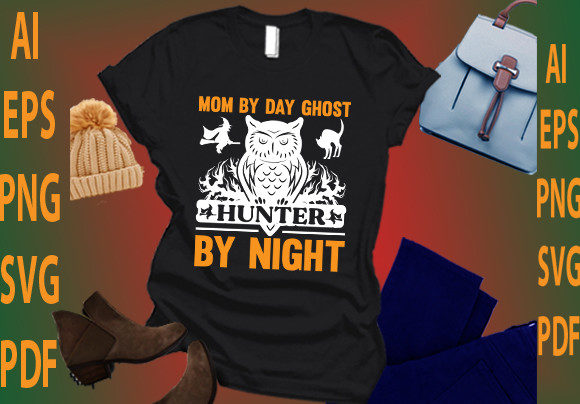
The design carries a distinct mood. It is whimsical yet edgy, appealing to a specific demographic of mothers who enjoy Halloween aesthetics year-round or simply appreciate a good pop-culture reference. Visually, the layout appears balanced, with a clear hierarchy between the text and the graphical elements. For a T-Shirt Designs category item, this balance is crucial. If the text overwhelms the graphic, it looks like a cheap print; if the graphic is too complex, it becomes a muddy mess of thread breaks and puckering.
In its raw digital form, provided as AI, EPS, PNG, SVG, and PDF files, the design offers flexibility. The ability to change colors via the vector formats is a significant advantage for custom orders. However, my focus here is on the embroidery application. The clean lines suggest that, with proper digitizing, this could work beautifully as a mix of satin stitch for the lettering and fill stitch for any solid graphical components. The transparency of the PNG allows for quick mockups, which is essential when presenting ideas to clients before committing to hoop time.
Real-World Application: The Custom Sweatshirt Test
To truly evaluate Mom by Day Ghost Hunter by Night, I imagined placing it on a mid-weight cotton blend sweatshirt. This is a staple item for craft businesses and Etsy sellers during the fall season. The design’s width seems appropriate for the chest area, avoiding the awkward stretch that occurs when a design is placed too close to the side seams.
When visualizing the stitching process, I considered the thread colors. A classic approach would use white or light gray thread on a black garment, creating high contrast that ensures readability from a distance. Alternatively, using pastel threads on a heather gray shirt could soften the look, making it suitable for everyday wear rather than just holiday-specific apparel. The versatility of the Graphics provided means you can adapt the color palette to match current trends, such as muted earth tones or vibrant neons, depending on your target audience.
For small shop owners, this design also translates well to tote bags. A canvas tote provides a stable, flat surface that minimizes distortion, allowing the finer details of the design to shine. Here, the durability of the stitch becomes paramount. A tote bag undergoes frequent washing and heavy use, so ensuring adequate stitch density without compromising the fabric’s integrity is key. I would recommend using a cut-away stabilizer for this application to provide long-term support.
Navigating Technical Challenges
While the design is charming, there are areas where caution is necessary. Small hoop sizes, such as 4x4 inches, might require scaling down the design. If the original dimensions are large, reducing it significantly could cause the text to become illegible or the graphical elements to merge. Always check the minimum recommended size before hooping. If the design includes tiny details or thin lines, these may need to be simplified or removed to prevent thread breaks and excessive trimming.
Textured fabrics present another challenge. Embroidering on a waffle-knit towel or a fuzzy fleece requires careful consideration of stitch type. Satin stitches can sink into plush fabrics, losing their definition. In such cases, using an underlay stitch effectively or opting for a applique design approach might yield better results. For dark fabrics, ensure that your thread colors have sufficient contrast. A dark blue thread on a black shirt will disappear, ruining the visual impact of the embroidery project.
Curved surfaces, like caps, demand precision. If you plan to use Mom by Day Ghost Hunter by Night on a baseball cap, center the design carefully to avoid distortion near the seams. The stiffness of the cap material usually supports dense stitching well, but always test on a scrap piece first. This step is non-negotiable for professional results. It saves time, thread, and frustration in the long run.
Commercial Viability and Brand Consistency
For Etsy sellers and handmade shop owners, the appeal of this design lies in its niche specificity. It speaks directly to a community that values both motherhood and individuality. This targeted appeal can drive higher engagement and conversion rates compared to generic designs. However, brand consistency is vital. If your shop specializes in delicate, floral baby embroidery, this edgy, humorous design might feel out of place. Conversely, if your brand focuses on quirky, modern gifts, it fits perfectly.
The inclusion of vector files like AI and EPS adds value for digital product sellers who might want to use the design for printable mockups or other non-embroidery applications. However, always confirm the licensing terms before selling finished items or digital products. Just because you have the files does not automatically grant commercial rights. Clarifying this with the creator protects your business from legal issues.
Practical Notes for the Embroiderer
- Test on Scrap Fabric: Before stitching on the final garment, run a test on similar fabric weight and texture. Check for puckering, thread breaks, and registration issues.
- Check Thread Contrast: View your design in black and white to ensure the elements remain distinct without color reliance. This helps in selecting thread colors that offer maximum visibility.
- Review Stitch Density: High-density areas can cause fabric distortion. Use appropriate stabilizers, such as tear-away for stable woven fabrics or cut-away for knits and stretchy materials.
- Confirm Hoop Size: Ensure your machine’s hoop can accommodate the design dimensions. If resizing, maintain the aspect ratio to prevent distortion of the text and graphics.
- Inspect Small Details: Zoom in on the digital file to identify any tiny elements that may not stitch out cleanly. Simplify or remove these if necessary to improve production efficiency.
In conclusion, Mom by Day Ghost Hunter by Night is a strong contender for seasonal collections and niche markets. Its success depends on thoughtful execution, attention to technical details, and alignment with your brand’s aesthetic. By treating it not just as a digital asset but as a physical product in the making, you can create high-quality, memorable items that resonate with customers. Whether it ends up on a cozy sweatshirt, a sturdy tote, or a playful patch, the right preparation will ensure the final product reflects the professionalism and care that define successful craft businesses.